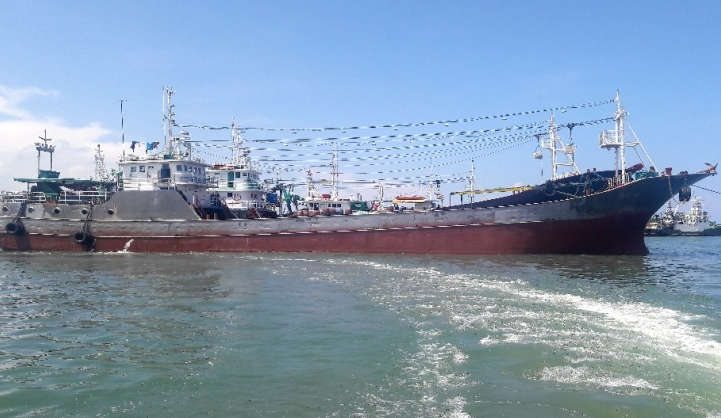
The Yuchai marine engines we supply into fishing and workboat fleets are built for continuous duty — but "continuous duty" assumes the fluids are clean, the cooling works and the crew catches small problems early. This is the checklist we hand over at commissioning, condensed to the parts that matter most in Philippine operating conditions.
01Know the enemy: the environment
Tropical waters attack a marine engine from three directions at once:
- Warm seawater reduces the temperature difference your raw-water cooling can exploit, so the cooling system works harder for the same result — fouled heat exchangers hurt more here than in cold water.
- High salinity and humid salt air corrode wiring, connections, fasteners and anything not deliberately protected.
- Humidity condenses in fuel tanks and vented spaces every time temperatures swing between night and day.
In these waters, maintenance is not about following a schedule — it is about protecting the engine from water it was never meant to drink.
02Fuel discipline
More marine engine downtime traces back to fuel than to any mechanical failure. Water and sediment find their way into bunkers, and tropical humidity adds condensation on top:
- Drain water and sediment from tank bottoms and filter bowls on a fixed schedule — daily during heavy operating periods.
- Change fuel filters on condition, not just on hours — a pressure drop or rising differential is the engine telling you something is in the line.
- Buy fuel from sources you trust. The cheapest drum on the pier is the most expensive thing you will ever put in the tank.
- For vessels that sit between trips, keep tanks full to reduce condensation space, and consider fuel polishing if layups are long.
03Cooling and the raw-water side
The raw-water circuit is where the sea gets its chance:
- Check and clean the sea strainer — plastic, nets and growth clog strainers gradually, then suddenly.
- Inspect the impeller on schedule and keep a spare aboard. A failed impeller turns into an overheated cylinder head if the trip is long enough.
- Watch the zinc anodes in the heat exchanger and cooling circuit. They are cheap, they sacrifice themselves by design, and an exhausted anode means the next component in line is the heat exchanger itself.
- Clean heat exchanger tubes when raw-water temperatures creep upward at the same load — that creep is scale and fouling, not imagination.
04Corrosion and electrics
Salt film on connections creates resistance, and resistance creates heat and voltage drop exactly where you cannot see it:
- Keep battery terminals, grounds and bond connections clean, tight and protected.
- Wash down the engine room with fresh water after salt-laden trips — including the alternator's exterior and cable trays.
- Check engine mounts, fasteners and guard rails for corrosion during scheduled services; vibration loosens what corrosion weakens.
- Inspect marine cable insulation at bends and penetrations — cracked sheathing on salt-air wiring is a fault looking for a date.
05Run it loaded
A diesel engine is healthiest working near its intended load. Hours of idling or very light running never let the engine reach temperature, which leads to carbon buildup in the exhaust and cylinder bore glazing — the slow, quiet way to lose compression.
If the operating profile is inherently light — long transits at low throttle, auxiliary sets sized for peak loads that rarely arrive — say so at specification time. The engine, gearbox ratio and propeller should be matched to the way the vessel actually works, and that match is part of what we review when you send us the application.
06Spares, records and crew
The difference between a bad afternoon and a lost fishing season is usually a spare part and someone who knows how to fit it:
- Critical spares aboard: fuel and oil filters, impeller, zinc anodes, belts, a set of fuses and the seals for routine services.
- Keep the logbook honest. Hours, fuel, temperatures and what was serviced — the log is the engine's medical record, and it is what makes remote troubleshooting possible.
- Train the crew that runs the engine. Operator and technician training is part of our aftersales support, and it is the highest-return maintenance investment there is.
The point of all of it
Engines do not fail at random. They fail at the intersection of fuel, cooling, corrosion and load — and every one of those four is manageable with a checklist and a trained crew.
We support the engines we supply with parts availability, service coordination and training around the Philippines. If your vessel or fleet needs a maintenance plan that matches these waters, talk to the Manila office.